
Investment
What investors look for in energy infrastructure projects
The questions that decide whether an energy infrastructure project gets a second meeting — and how sponsors can answer them before they are asked.
Read article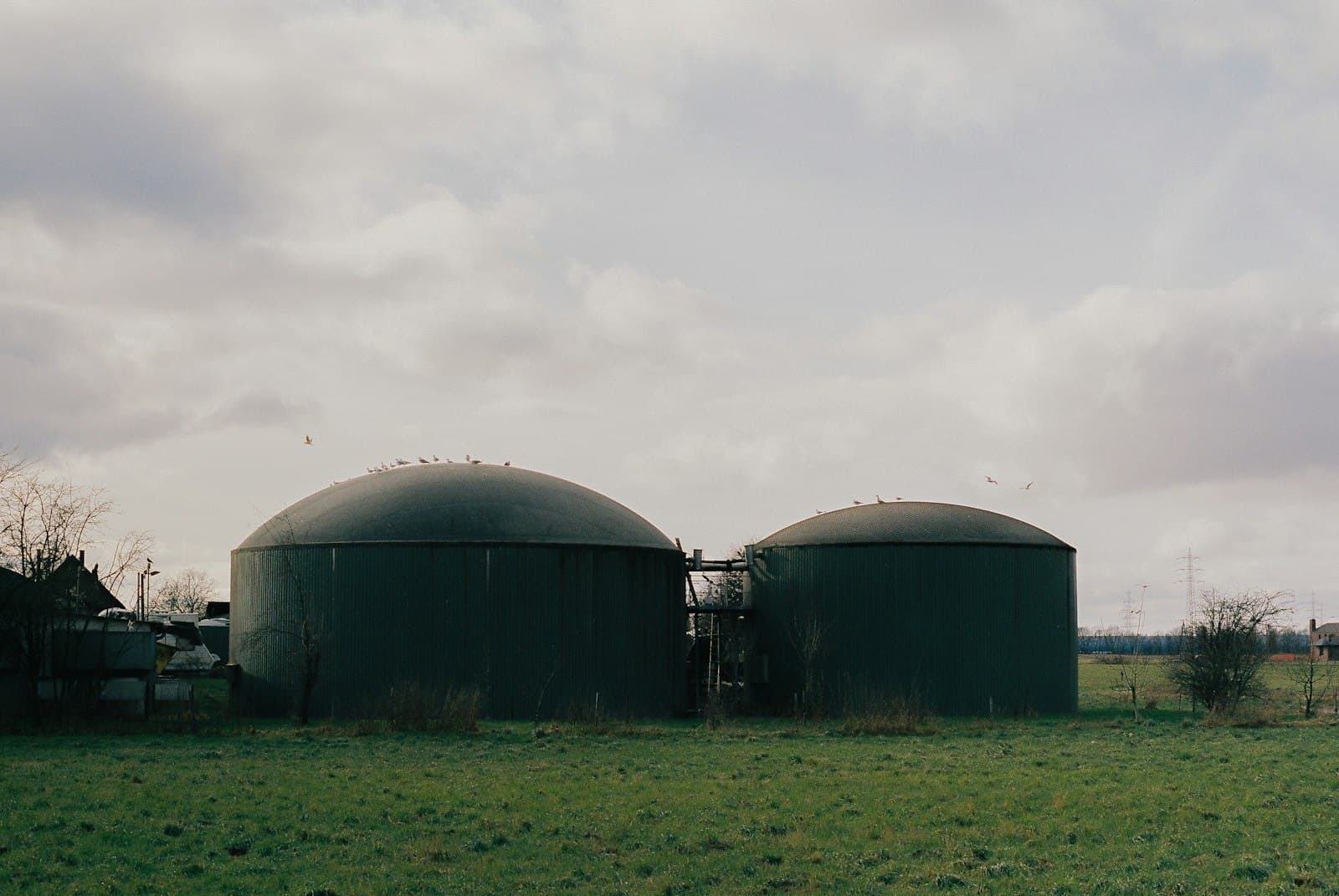
Insights · Energy Markets
Two related products with different technology, revenue models and investment cases — and why feedstock sits at the centre of both.
Reviewed by Luis Violante, Founder & CEO
Biogas and biomethane are often mentioned together, and they start from the same process. Commercially, however, they are different products, with different equipment, customers and revenue models. For anyone assessing a project, understanding the difference is the starting point.
Biogas is produced by anaerobic digestion — the breakdown of organic material by bacteria in the absence of oxygen, inside sealed tanks called digesters. Common feedstocks include agricultural residues, animal manure, food and organic waste, sewage sludge and energy crops.
Raw biogas is typically around 50–70% methane, with most of the remainder carbon dioxide and small amounts of water vapour, hydrogen sulphide and other trace compounds. Its most common use is on-site combustion in gas engines that produce electricity and heat together (combined heat and power, or CHP).
Biomethane — also called renewable natural gas — is biogas that has been cleaned and upgraded by removing the carbon dioxide and impurities. The result is typically more than 95% methane and can be used in the same way as natural gas.
Upgrading is done with established technologies such as membrane separation, water scrubbing, pressure swing adsorption or chemical (amine) scrubbing. Once upgraded, biomethane can be injected into the gas grid, compressed or liquefied for use as a transport fuel, or supplied to industrial users.
The commercial difference is what the project sells. A biogas-to-power plant sells electricity — and, where there is a nearby user, heat. Its economics depend on the electricity price or contract it can secure, its grid connection, and whether the heat can be used rather than wasted.
A biomethane plant sells gas. It needs a connection to the gas grid or a direct customer, and it may also earn revenue from renewable gas certificates, depending on the market. Upgrading adds capital and operating cost, so biomethane projects generally need a larger and steadier gas output to justify it.
Whichever product a project makes, its credibility rests on feedstock. A digester needs a steady, predictable supply of suitable material for the whole life of the plant. Investors will ask where it comes from, under what contracts, at what cost, how far it travels, and what happens if a supplier stops.
Feedstock quality matters as much as quantity: different materials produce very different volumes of gas. A project that can show contracted, well-characterised feedstock from nearby sources is in a much stronger position than one relying on assumptions.
Neither is inherently better. The right choice depends on location, scale, feedstock, grid access and the local market for electricity, heat and gas. Some projects start with power generation and add upgrading later; others are designed for biomethane from the beginning.
For investors, the useful question is not “biogas or biomethane?” but “does this project’s choice fit its feedstock, its connections and its customers?”
This article is general information only. It is not investment, legal, financial or technical advice, and it is not an offer of securities. Decisions should be taken on your own analysis and with your own advisers.
More Insights
Investment
The questions that decide whether an energy infrastructure project gets a second meeting — and how sponsors can answer them before they are asked.
Read article
Infrastructure
Regulatory clarity, a sound commercial structure and a defined roadmap — what “investment-ready” actually means, and how to show it.
Read article
Investment
What investors and their advisers check, in what order, and what sponsors should have ready before the process starts.
Read articleNext Step